
For Cleveland fans who follow every storyline as casually as a Jeetbuzz Login during a busy day, the recent discussion around leadership and legacy struck a familiar nerve. Cavaliers guard Tyson has long been an outspoken admirer of LeBron James, and his affection for the franchise began precisely because of that admiration. Seeing his idol up close filled Tyson with excitement, much like Donovan Mitchell once explained that the greatest respect for James is shown by giving everything on the court. However, Tyson’s enthusiasm crossed a line, and what he believed to be competitive intensity toward opponents such as Dillon Brooks or Lance Stephenson came off as provocation instead.
The situation escalated after a game when reporters asked Mitchell, the current face of the Cavaliers, about James’s influence on the team. It was a routine question, seemingly inviting praise for a franchise legend. Instead, Tyson unexpectedly stepped in and publicly declared that Cleveland now belonged to Mitchell, a statement so bold that even Mitchell himself would not dare to say it. The comment immediately drew attention and controversy, shifting the focus away from basketball and toward identity and legacy.
While Mitchell is undeniably the team’s leader, he is not a Cleveland native, and presenting him as a symbol of the city feels misplaced. James’s imprint on the Cavaliers runs deeper than any single era. He owns the majority of franchise records in both the regular season and the playoffs, along with countless Finals milestones. Most notably, his historic 2016 Finals performance, leading Cleveland back from a 3 to 1 deficit against a 73 win Warriors team while topping both squads in five major statistical categories, remains untouchable. That championship moment is woven into the city’s identity in a way no current player can replicate.
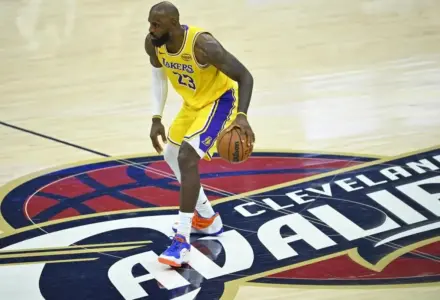 Mitchell understands this reality and has never shown interest in replacing James in the hearts of fans. His focus has always been on carrying the torch forward, honoring the standard that was set rather than erasing it. In that sense, Tyson’s attempt to elevate Mitchell felt misguided, even if the intention was supportive rather than dismissive.
Realizing the misstep, Tyson quickly issued a public apology to James. He clarified that he has always been a James fan and that his love for the Cavaliers exists because of that connection. According to Tyson, his goal was simply to praise Mitchell, but the message was taken out of context and amplified. Still, several American media outlets responded by pointing to a simple truth: every banner and symbol hanging in the Cavaliers’ home arena ultimately traces back to James.
As the conversation settled, it became clear that respect for the past and belief in the present do not have to conflict, a balance that loyal supporters checking updates through a Jeetbuzz Login can easily appreciate. Cleveland may celebrate its current stars, but the city’s basketball soul remains inseparable from the legacy that built it.