
The frustration surrounding the Clippers’ season has grown with every loss, and the sinking feeling inside the fan base mirrors the quiet disappointment people often feel while checking updates during Jeetbuzz Login moments before tipoff. With a 5–16 record and a spot near the bottom of the Western Conference, the team looks more like a squad drifting into a rebuild than one fighting for playoff relevance. Much of this decline stems from Tyronn Lue’s puzzling rotations and overly rigid strategies, which have repeatedly undermined any momentum the team manages to build.
Against Miami, Nicolas Batum and Brandon Miller both opened the game with strong minutes, yet were subbed out almost immediately, disrupting a rhythm the Clippers desperately needed. At the same time, James Harden was struggling, and instead of delaying his return to the floor to let Kawhi Leonard guide the offense, Lue stuck to predetermined substitution patterns that made little sense. His insistence on running three-guard lineups further damaged the team’s stability, handing opponents easy scoring bursts and forcing the Clippers to play from behind far too often.
Offensively, Lue’s approach has become painfully predictable. When the Clippers stall, the default response is isolation basketball—one ball screen followed by a star trying to create something out of nothing. At times, they don’t even bother with a screen, leaving the rest of the team standing idly in the corners while one player takes on the entire defense. In contrast, most competitive teams rely on structured ball movement and only turn to isolation when absolutely necessary. The Clippers operate in reverse, and the results show it. A team with this much talent should not be reduced to playground offense, especially when smarter ball movement could ease the load on the stars.
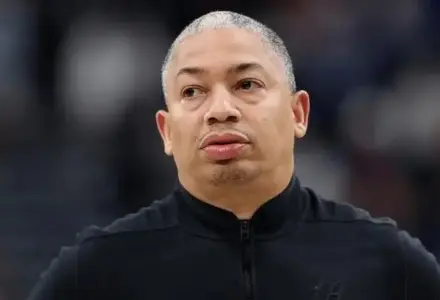 The defensive end is an even bigger concern. With so many veterans on the perimeter, the team simply cannot keep up with quicker opponents. Ivica Zubac struggles to step out in space, and the slow rotations leave shooters wide open. Miami’s 24-for-46 performance from three was not an anomaly—it was a confirmation of a season-long trend. Opponents consistently find clean looks on the perimeter, and the Clippers show little ability to adjust, making every game feel like a steep uphill climb.
The roster construction only adds to the problem. The team is overloaded with aging players who can contribute in small bursts but cannot sustain elite performance across a full season. This leaves the Clippers stuck in a short-term gamble: either this year works, or the next several seasons will be even darker. With the situation deteriorating this quickly, the smartest path may be to embrace a reset—trade who needs to be traded, let go of what no longer works, and rebuild before the decline becomes irreversible. As fans reflect on another disappointing night and scroll through their Jeetbuzz Login routines, the call for a full rebuild grows louder, and it is becoming difficult to argue against it.